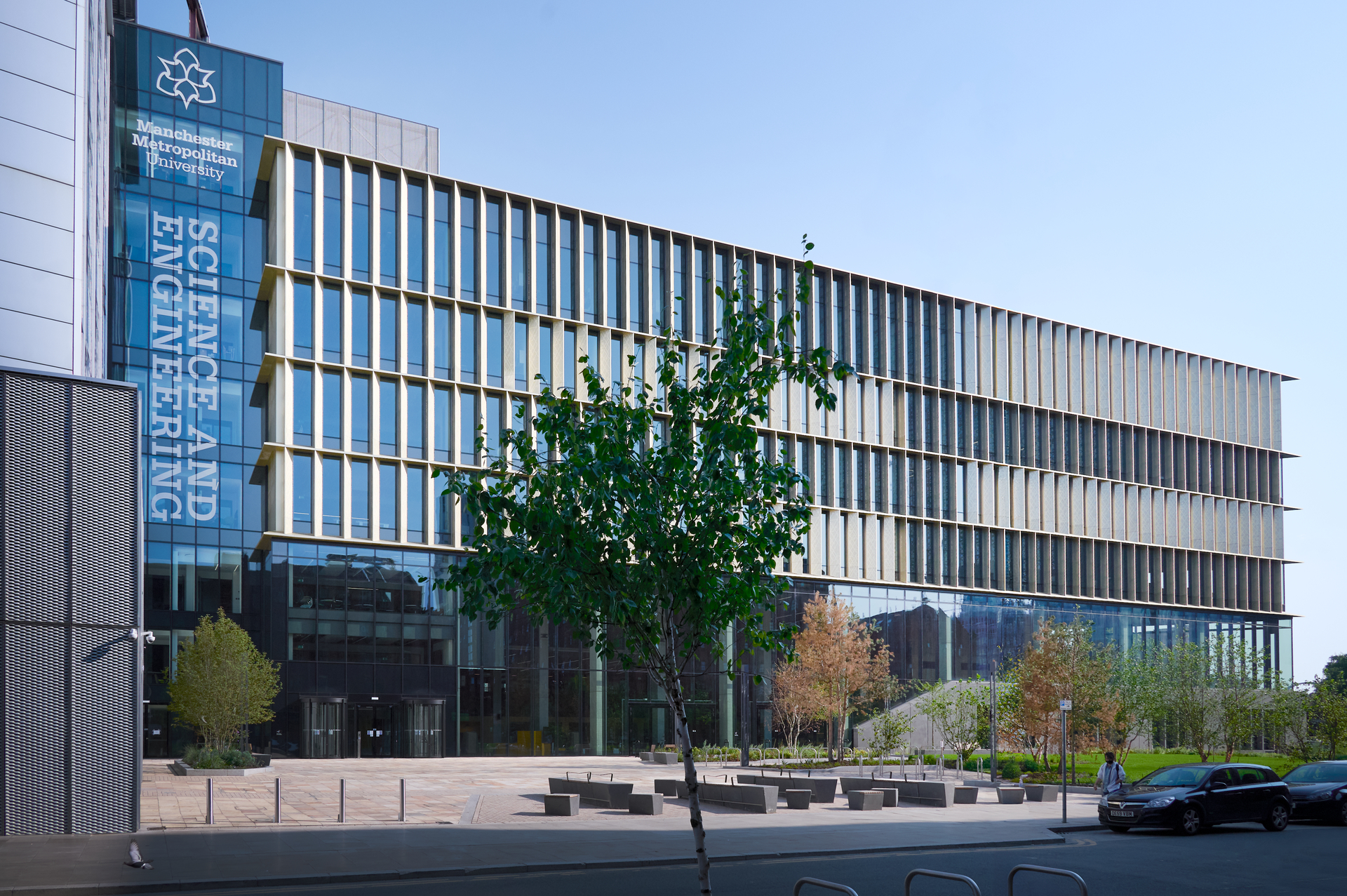
About the Faculty
Manchester Metropolitan University is one of the UK's largest universities, with a strong commitment to interdisciplinary research addressing real-world challenges. Our newly established School of Biological and Chemical Sciences, within the Faculty of Science and Engineering, brings together expertise spanning biodiversity, zoology, ecology, physiology and the biomedical sciences. The University has growing strengths in artificial intelligence, data science and computational research, supported by its new Centre for Digital Data Research (CDDR). Together, these strengths provide an exciting environment for research at the intersection of AI, biological sciences and conservation.
About the School
You will join the School's Biodiversity and Environmental Resilience research group, where researchers investigate animal biology, evolution, behaviour and conservation, and develop innovative approaches to understanding and protecting the natural world. Our research combines traditional biological expertise with emerging technologies, including artificial intelligence, advanced 3D imaging and computational modelling. You will benefit from access to specialist research facilities, including imaging equipment in the University's new £1m Centre for Digital Modelling and Analysis for Cultural Heritage (D-MACH), and opportunities to engage with the wider Species Biology and Conservation (SBAC) research community through seminars, collaborative activities and knowledge exchange.
About the Project
This position is funded by the Natural Environment Research Council (NERC) through Phase 1 of its Artificial Intelligence for Environmental Science (AI4ES) programme. The project, Using Camera Trap Images to Reconstruct Wildlife 3D Body Size and Condition, aims to develop innovative AI-based methods for measuring animal size, shape and body condition from standard camera-trap photographs.
By combining monocular depth estimation with single-image 3D reconstruction, the project will develop new approaches to recovering quantitative, real-world measurements of wild animals without the need for physical handling. Working with Chester Zoo and the Max Planck Institute for Evolutionary Anthropology, we will develop and validate these methods using advanced 3D imaging techniques, including LiDAR and photogrammetry, with the longer-term aim of supporting non-invasive wildlife health monitoring and conservation.
The project is led by Dr Charlotte Brassey (Principal Investigator), alongside Manchester Met colleagues Dr Selvino de Kort and Dr Bradley Cain, and external collaborators Dr Peng Wang (University of Sussex), Dr Lisa Holmes (Chester Zoo) and Dr Adam van Casteren (Max Planck Institute for Evolutionary Anthropology).
About the Role & Team
You will play a central role in the day-to-day technical development and delivery of the project, with responsibility for developing, testing and validating AI-based approaches to reconstructing animal body size and shape from camera-trap imagery. Your work will primarily involve computational research, including model development, dataset curation and quantitative analysis, alongside opportunities for practical data collection and validation at Chester Zoo.
You will be encouraged to take ownership of your research, contribute to peer-reviewed publications and conference presentations, and help shape future research directions, including the development of a larger Phase 2 funding application. You will also become part of the wider Biodiversity and Ecosystem Resilience research community, with opportunities to participate in the Species Biology and Conservation (SBAC) seminar series and professional development activities.
Key Responsibilities
- Benchmark and fine-tune state-of-the-art monocular depth-estimation models using camera-trap imagery.
- Develop and evaluate AI-based methods for single-image 3D reconstruction of animals, integrating metric depth information to recover body dimensions and shape in real-world units.
- Curate and manage colour, LiDAR, photogrammetry and 3D datasets.
- Develop robust, reproducible computational pipelines using Python and relevant deep-learning frameworks.
- Undertake quantitative validation, statistical analysis and evaluation of model performance, accuracy and uncertainty.
- Collaborate with project partners to undertake data collection and validation at Chester Zoo.
- Contribute to the development and release of open-source software, datasets and trained models.
- Prepare research findings for publication in peer-reviewed journals and presentation at national and international conferences.
- Contribute to project management, dissemination, stakeholder engagement and the development of follow-on funding applications, including Phase 2 of the NERC AI4ES programme.
Key Skills & Experiences
We are looking for a highly motivated researcher with strong computational skills and experience in computer vision, machine learning, AI-based image analysis and/or 3D reconstruction. We welcome applicants from a broad range of disciplinary backgrounds; previous experience in ecology or zoology is not required. This is an interdisciplinary project, and we recognise that relevant expertise can be developed through a variety of research backgrounds and career pathways. We therefore encourage applications from candidates who bring transferable skills and enthusiasm for the project, even if they do not meet every criterion listed below.
Essential criteria:
- A PhD (or close to completion) in a relevant discipline, such as Computer Science, Artificial Intelligence, Machine Learning, Robotics, Computational Biology, Neuroscience, Engineering or another quantitative or computational discipline.
- Strong programming skills in Python.
- Practical experience with deep-learning frameworks such as PyTorch, TensorFlow or equivalent.
- Research experience developing, adapting and/or evaluating computer-vision or machine-learning models.
- Experience of quantitative analysis and rigorous evaluation of computational methods.
- Evidence of making a demonstrable, independent contribution to research projects.
- Excellent written and verbal communication skills, with the ability to work effectively within an interdisciplinary research team.
- Excellent organisational skills, attention to detail and the ability to manage research activities and deadlines.
- Ability to travel to Chester Zoo and undertake on-site data collection.
To learn more about role and requirements, please read the Job Description provided below.
If you would like to join our people and share our ambition, we would love to hear from you!
Application & Assessment Process:
- To apply, please submit a CV and covering letter detailing your suitability, on the application portal.
- For informal enquiries, about this vacancy, please contact Dr Charlotte Brassey on c.brassey@mmu.ac.uk
- Please be aware that only applications including a cover letter may be considered at shortlisting stage.
- Assessment will include a competency-based interview and a practical task to be completed on the day. Further details of the task will be provided with the interview invitation.
- Interviews are expected to be held in the w/c 16 November
We believe in working together, sharing knowledge and valuing everyone's contributions. Develop your skills, further your knowledge and be part of a team who are transforming lives, every single day!
Further Information
Manchester Metropolitan University fosters an inclusive culture of belonging that promotes equity and celebrates diversity. We value a diverse workforce for the innovation and diversity of thought it brings and welcome applications from local and international communities, including those from Black, Asian, and Minority Ethnic backgrounds, disabled people, and LGBTQ+ individuals.
We support a range of flexible working arrangements, including hybrid and tailored schedules, which can be discussed with your line manager. If you require reasonable adjustments during the recruitment process or in your role, please let us know so we can provide appropriate support.
Our commitment to inclusivity includes mentoring programmes, accessibility resources, and professional development opportunities to empower and support underrepresented groups.
Manchester Met is a Disability Confident Leader and, under this scheme, aims to offer an interview to disabled people who apply for the role and meet the essential criteria as listed in the attached Job Description for that vacancy.
This vacancy is expected to attract a high volume of applications. Therefore, under the Disability Confident Scheme, only disabled people who apply under the scheme and best meet the essential criteria will be offered an interview.
Find out more about our story and explore our campus!
Details
- Location:Manchester All Saints Campus
- Faculty / Function:Science & Engineering
- Salary:Grade 8 (£41,885 to £48,337)
- Closing Date:8 November 2026
- Contract Type:Fixed Term
- Contract Length:31st March 2028
- Contracted Hours per week:37